

The Complete Guide to Cross-Grain Leather
If you have ever shopped for a durable designer handbag, wallet, or belt, you have likely held cross-grain leather in your hands. It is one of the most common materials in the luxury accessory world, yet it is often misunderstood. Is it “real” leather? Why does it feel stiff? How is it different from Saffiano?
Table of Contents
What is Cross-Grain Leather?
Cross-grain leather (sometimes spelled “crossgrain”) is a type of corrected-grain leather. “Corrected” simply means the leather has been processed to remove surface imperfections.
Unlike “raw” leathers (such as vegetable-tanned leather) that show every scratch and scar of the animal hide, cross-grain leather is sanded down and then embossed with a specific pattern. As the name suggests, this pattern usually consists of diagonal lines or a cross-hatch design stamped directly into the surface.
Cross-grain leather is produced through a combination of mechanical processing, heat, moisture control and surface finishing. Although it is often described simply as “stamped leather,” the real process is highly controlled and far more technical. Below is an accurate overview of how cross-grain leather is manufactured in the wider leather industry.
The Manufacturing Process of Cross-Grain Leather
-
Preparation and Splitting
Hide selection
Manufacturers commonly use bovine hides for cross-grain leather. Because the surface will receive an embossed pattern, hides with visible marks, insect bites or minor surface irregularities can still be used.
Splitting
Raw hides are thick, often exceeding four millimeters. They are split horizontally into layers.
The bottom layer becomes suede or split leather.
The top layer is reserved for cross-grain production.
Buffing (optional, depending on the tannery)
In many industrial settings, the top layer is lightly or heavily buffed to level the surface and remove natural grain irregularities. This creates a uniform canvas for embossing.
Some tanneries emboss unbuffed hides, but large-scale production usually prepares the surface first to achieve a clean, consistent pattern.
-
Embossing the Cross-Grain Pattern
Embossing is not a simple stamping action. It is a heat-transfer and pressure-driven process that reshapes the surface fibers.
Temperature
The steel plates or roller cylinders used for embossing are heated to approximately 80°C to 120°C (175°F to 250°F). Heat softens the surface layer and allows the pattern to take shape.
Hydraulic pressure
Industrial embossing machines apply substantial pressure, generally in the range of 2 to 5 megapascals. The combination of heat and pressure compresses the fibers into the micro-pattern permanently.
Moisture control
Just before embossing, the hide is lightly dampened.
When the heated plate contacts the damp leather, the remaining surface moisture evaporates rapidly and helps fix the pattern into the fiber structure, similar to how steam-ironing sets a crease permanently into fabric.

-
Surface Finishing
After the pattern is embossed, the surface finish determines the final look, feel and performance of the leather. There are two common finishing methods.
Polyurethane (PU) finish
Many mass-produced cross-grain leathers use a sprayed or roll-coated polyurethane layer.
This creates a protective shell that is:
highly water-resistant
shiny or semi-shiny
rigid or “plastic-like” in touch
This is the most common finish in lower- to mid-market goods where durability and uniformity are prioritized.
Wax-based finish (used in higher-end saffiano-style leathers)
Some manufacturers use hard wax blends pressed into the grain during embossing, a method famously associated with saffiano leather.
Wax finishes create:
a drier, more organic feel
stronger scratch resistance
a more matte, refined appearance compared to PU coatings
This method requires more precision and results in a surface that ages differently than plastic-coated versions.

Is Cross-Grain Leather Right for You?
People often ask whether cross-grain leather is a good choice. Materials behave differently depending on the kind of days they go through. Cross-grain leather has a very stable surface and a very quiet personality. Some people appreciate that. Others find it too controlled. This section helps you see where you stand.
-
What Cross-Grain Leather Does Well?
Cross-grain leather keeps its appearance for a long time. Small scratches do not stand out because the texture breaks up the reflection on the surface. If you prefer objects that look nearly the same after years of use, this material supports that preference. The leather’s rigid structure also helps bags and wallets hold their shape, even when they are not filled. If you live in a place with frequent rain or move between public spaces all day, the surface is easy to wipe clean and does not react dramatically to moisture.
-
Where Cross-Grain Leather Feels Limited
Cross-grain leather is firm. It does not soften around your body, and it does not develop the kind of patina that people who love natural materials often look for. The surface can feel cool and slightly distant because most cross-grain finishes include a protective coating that reduces the tactile softness of the fibers. Edges on structured items can become stiff over time, and the material will not feel warm or pliable in the way naturally finished full-grain leather does.
-
How to Decide if It Fits Your Life
You carry your things through busy environments
If your bag moves between trains, offices, cafés and airport floors, you may prefer a material that stays composed no matter what touches it. Cross-grain leather is practical in this situation because the surface is stable and the structure protects what is inside. You do not need to handle it delicately.
You appreciate materials that change with time
If you enjoy seeing leather darken, soften and gradually shape itself to your routines, cross-grain leather will likely feel too static. The surface does not record your daily use visibly. A natural full-grain or vegetable-tanned surface aligns better with this preference.
You need something easy to look after
If you tend to place your wallet wherever there is space, or you move quickly between tasks and do not want to think about maintenance, the simplicity of cross-grain leather may fit your rhythm. A cloth and a moment of attention are usually enough to keep it clean.
You choose materials by how they feel in the hand
If the tactile experience is central for you, cross-grain leather may not satisfy. Its structure is firm, and the protective finish reduces the softness of the fibers. People who enjoy materials for their warmth prefer smoother or naturally finished leathers.
Choose cross-grain leather when you want a structured object that stays visually steady over time and does not require careful handling. Avoid cross-grain leather when you are looking for softness, warmth or a surface that will develop a clear patina.
If you enjoy seeing leather darken, soften and gradually shape itself to your routines. A natural full-grain wallet aligns better with this preference

Cross-Grain Leather vs Other Leather Types
Cross-Grain Leather Comparison Table
|
Feature |
Cross-Grain Leather |
Saffiano Leather |
Pebble Grain Leather |
Full-Grain Leather |
|
Surface Pattern |
Fine, shallow, consistent lines |
Diagonal cross-hatched pattern |
Rounded, irregular pebble texture |
Natural, unaltered grain |
|
Production Method |
Corrected surface, embossed pattern |
Similar embossing method with distinct pattern |
Embossed pebble pattern; may be natural or corrected |
No correction or embossing; natural hide surface |
|
Structure / Feel |
Firm, structured, stable |
Firm and structured |
Softer, more tactile, relaxes over time |
Warm, open texture, softens gradually |
|
Patina Development |
Minimal to none |
Minimal |
Moderate over time |
Strong patina development |
|
Scratch Resistance |
High due to pattern and coating |
High |
Good due to texture |
Moderate, depends on finish |
|
Water Resistance |
Good due to coating |
Good |
Moderate |
Low to moderate |
|
Aging Behaviour |
Remains visually consistent |
Remains consistent |
Becomes softer and slouchier |
Changes visibly with use |
|
Best Suited For |
Structured bags, wallets, low-maintenance use |
Structured accessories with defined texture |
Soft, relaxed silhouettes |
Natural-grain pieces designed to evolve over time |
-
Cross Grain and Saffiano

Cross grain leather and saffiano leather belong to the same family of embossed materials. Both are created through heat, pressure and a patterned metal plate that reshapes the surface of the hide. The processes overlap so closely that many manufacturers treat them as variations of the same idea. The difference lies in the pattern itself. Saffiano refers to a diagonal cross-hatched structure, while cross grain uses a smaller and more neutral pattern that does not lean in any direction. These distinctions were once tied to specific production methods, but over time the terms have become general descriptors for two visual styles.
In practical terms, the behaviour of both materials aligns very closely. The surfaces are firm and stable. The texture interrupts reflections and masks small scratches. The protective finishes commonly used on both create a level of resistance against moisture and handling that many people find convenient in daily use. The choice between the two is therefore a matter of appearance rather than performance. Cross grain offers a quieter and more understated geometry, while saffiano presents a sharper and more defined pattern. The underlying goal is the same in both cases. The leather is engineered to remain orderly, clean and structured even when it is used frequently.
-
Cross Grain and Pebble Grain

Pebble grain and cross grain differ from the moment you look at them. Pebble grain relies on a rounded, irregular texture that creates a natural sense of movement, almost as if the surface were gently shifting under the light. This embossing produces a soft and approachable feel, and many pieces made with pebble grain gradually relax and take on a more casual shape as they age. The pattern rises and falls across the hide, which gives the leather a cushioned impression in the hand.
Cross grain takes a different approach entirely. The pattern is fine, shallow and consistent. The lines are arranged in a way that keeps the surface visually calm, even when exposed to friction or pressure. This subtle geometry reinforces the structure of the leather and allows bags or small goods to hold their form without collapsing into folds. When placed side by side, pebble grain feels more expressive and tactile, while cross grain feels composed and restrained.
Both surfaces handle scratches well because their patterns break up light and soften contrasts. Cross grain often resists water slightly better because its surface is more uniform, but the difference depends largely on the finishing method. Your decision will not come down to durability but to personality. Pebble grain belongs to soft, relaxed silhouettes. Cross grain belongs to pieces that are meant to stay upright, precise and visually consistent.
-
Cross Grain and Full Grain

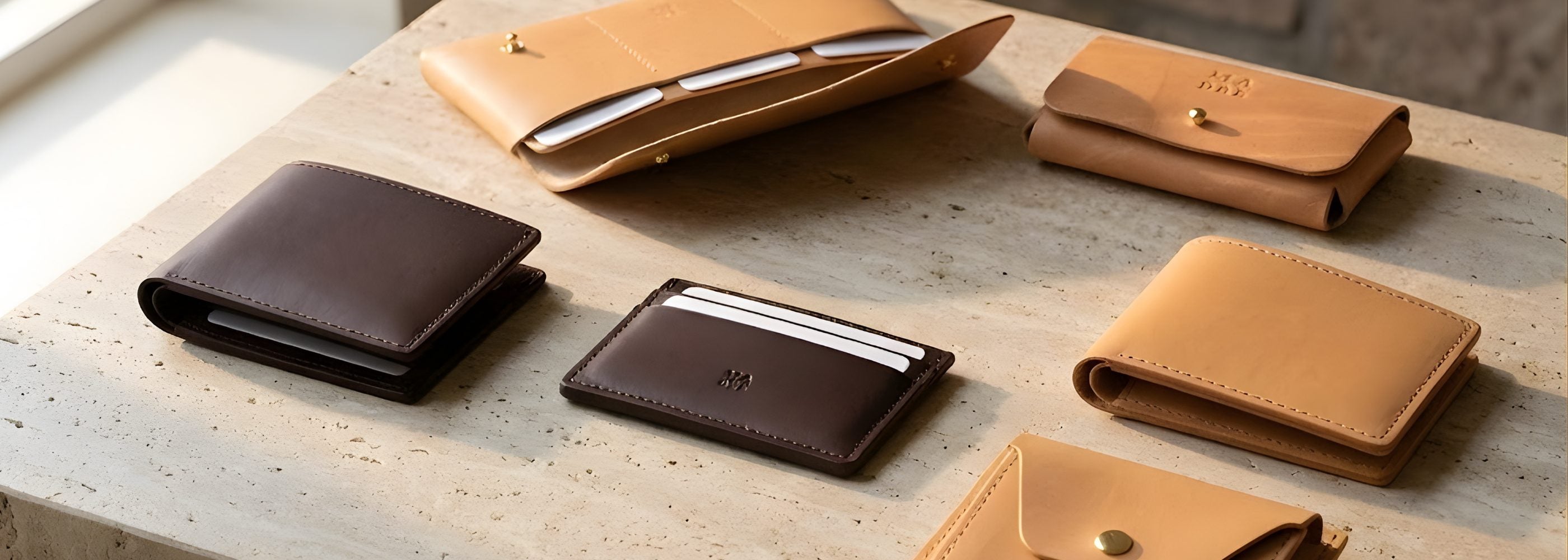
Full-grain Vegetable-tanned Leather Products from Atelier Madre in Barcelona
Cross grain leather and full grain leather differ because they serve different purposes at the level of surface and structure. Full grain leather keeps the original surface of the hide. The natural markings remain visible and the fibre structure stays intact. This is why full grain leather changes gradually during use. It becomes smoother, slightly darker and develops a surface that reflects handling over time. These changes are normal and are part of how an untreated grain behaves.
Cross grain leather follows a more controlled approach. Before the pattern is applied, the surface is usually corrected to remove irregularities. A heated plate then presses a uniform texture onto the hide, and a protective finish stabilises the pattern. The result is a surface that absorbs very little visual change. It does not darken in a meaningful way, and the texture keeps scratches from showing clearly. The aim here is consistency rather than development.
The tactile difference is also straightforward. Full grain leather feels open and fibrous because you are touching the natural surface directly. Cross grain leather feels firmer and more closed due to the coating and the embossed structure. Both materials are durable, but they offer different experiences. Full grain shifts with use. Cross grain remains stable.
If you prefer leather that shows its natural grain and changes gradually with use, the full grain option will be the better match. You can explore our collection if this is the type of material you are looking for.
Does Cross-Grain Leather Crack?
Cross-grain leather can crack over time because the embossed surface and protective coating are less flexible than the fibres underneath. When the leather bends repeatedly, the natural fibres move, but the coated surface cannot stretch in the same way. This creates tension that eventually forms small lines in the finish, which deepen into visible cracks with continued use. Areas that experience frequent bending or friction, such as corners, folds and edges, are the first to show wear. Environmental factors like heat, low humidity and prolonged sunlight can also make the coating more brittle. In most cases the underlying leather remains intact, and the cracking occurs primarily in the surface layer rather than the structure of the hide.
Is Cross-Grain Leather Worth the Price?
Whether cross-grain leather is worth the price depends entirely on what you expect from the material. Its value comes from surface stability rather than natural character. If you want leather that stays orderly, hides small marks and requires little day-to-day attention, cross-grain performs well and justifies its cost in long-term visual consistency. If you prefer leather that softens, shows variation, or develops visible ageing, the premium for cross-grain will feel misplaced because the material is engineered not to change. The price is therefore reasonable when you are prioritising durability, structure and ease of use, but less compelling if your interest lies in natural grain, patina or tactile warmth.
Care Guide: Maintaining Cross-Grain Leather

Cross-grain leather does not require elaborate maintenance, but it still benefits from basic handling routines that prevent unnecessary wear. The surface is designed to stay stable under regular use, yet the material can deteriorate if exposed to certain cleaning agents or mechanical stress. The following guidelines outline simple steps that help keep the surface in good condition without introducing unnecessary treatments.
Cleaning and General Handling
A soft, slightly damp cloth is usually sufficient for removing dust or light surface dirt. Microfibre cloths work well because they lift particles without scratching the finish. When dealing with a more persistent mark, a small amount of clear, mild soap diluted in water can be used. It should be applied gently and removed immediately with a clean cloth so no residue remains on the surface. Cross-grain leather is rigid, so storage matters. Keeping the item in a dust bag when not in use prevents friction from other objects, and it is important that heavier items are not placed on top of it to avoid creating permanent creases.
What to Avoid
Alcohol-based products, bleach and other solvents should not be used under any circumstances. These substances can break down the protective surface layer and cause the pattern to fade or become uneven. Oil-based leather conditioners are also unsuitable. Cross-grain finishes are not designed to absorb these treatments, and the oils tend to sit on the surface, creating a tacky film that attracts dust. Attention should also be given to the edges. The cut edges are usually sealed with a specialised paint or coating that holds the layers together. Repeated picking, bending or friction at these points can cause the coating to crack or separate prematurely.
Frequently Asked Questions
Is cross-grain leather real leather?
Yes. Cross-grain refers to the surface pattern, not the underlying hide. It can be made from various leather grades depending on the manufacturer. The embossing does not determine whether the leather is full-grain, top-grain or corrected.
Why do so many brands use cross-grain leather?
The main reason is consistency. The surface remains visually stable, even under heavy use, and requires less careful handling. It also performs well in environments where bags or small goods come into contact with rough surfaces, keys or moisture.
Does cross-grain leather develop patina?
Not in a pronounced way. The embossed pattern and surface coating limit how much the leather changes visually. It is designed to remain relatively unchanged rather than show ageing.
Is cross-grain leather durable?
Yes. The compacted surface and protective finish make it resistant to scratches, stains and general abrasion. The durability is concentrated at the surface, while the underlying strength depends on the grade of leather used.
How does cross-grain feel compared to other leathers?
It feels firmer and more structured than smooth or pebble-grain leather. The finish creates a cooler, more rigid surface. It does not have the warm, open texture of untreated full-grain.
Is cross-grain better than smooth leather?
It depends on expectations. Cross-grain hides scratches and stays visually consistent. Smooth leather shows marks more quickly but develops more character over time. The difference is functional rather than hierarchical.
Is cross-grain leather waterproof?
It is not fully waterproof, but the finish makes it more water-resistant than untreated surfaces. Light rain or spills usually sit on top long enough to be wiped away. Prolonged soaking should still be avoided.
Does cross-grain crack?
The leather itself usually remains intact, but the protective surface layer can crack after long use, especially at heavily bent areas or edges. This is a common ageing pattern for coated leathers.
Is cross-grain leather easy to clean?
Yes. Dust and minor marks can usually be removed with a soft damp cloth. Strong cleaners and alcohol-based products should not be used, as they can damage the coating.
How can I tell cross-grain leather from saffiano leather?
Saffiano has a distinct diagonal cross-hatched pattern. Cross-grain is a broader category that includes various small-scale linear or geometric textures. Both are made using similar embossing methods.
How can I tell cross-grain leather from pebble grain?
Pebble grain has a rounded, three-dimensional pattern that looks like small stones. Cross-grain has a flatter and more geometric texture. Pebble grain tends to feel softer; cross-grain feels more structured.
Is cross-grain leather considered high quality?
The quality depends on the underlying hide, not the pattern. High-quality hides can be embossed with cross-grain, just as lower-grade hides can be corrected and embossed. The embossing itself does not determine quality.