
Article: Everything You Think You Know About Leather Is Incomplete !
Everything You Think You Know About Leather Is Incomplete !
Leather is a material people use every day but rarely understand beyond surface labels. It is sold as a finished product, yet experienced over years of use. This guide brings together everything we have written about leather into a clear framework, explaining how it behaves from raw hide to long-term wear, so you can choose it with confidence.
Table of Contents
• What leather is and what it is made of
• Why does leather feel confusing to buy?
• What are leather terms meant to tell you?
• Leather types explained by hide layer
• Why does tanning matter after hide selection?
• How to choose the right leather
• Leather as a long term investment

What leather is and what it is made of
Leather is made from animal hide that has been stabilised through tanning so it does not decompose, while still retaining flexibility and strength. Untreated hide would dry, rot, or crack. Through tanning, it becomes a durable material capable of repeated movement, load bearing, and long term use. A deeper breakdown of the material itself is explained in "What Is Leather Made Of".
What makes leather fundamentally different from synthetic materials is its structure. Leather is fibrous rather than layered, breathable rather than sealed, and structurally continuous rather than laminated. Because of this, leather does not simply sit on the surface of an object. It becomes part of the object’s structure.
This is why leather has historically been used for items that must endure repeated stress, constant handling, and years of use.
Why does leather feel confusing to buy?
Leather is one of the most widely used materials in fashion and accessories and at the same time one of the most misunderstood. Words such as full grain, premium, Italian leather, or vegetable tanned are everywhere, yet they often fail to explain what most people actually want to know. Regional perceptions and marketing myths are discussed further in Everything You Need to Know About Italian Leather and Spanish Leather Everything About Leather in the Spanish World.
What will this leather feel like after years of use?
Will it soften or crack?
Will it age with character or simply look worn?
This confusion does not come from a lack of interest or intelligence on the buyer’s side. It comes from the fact that leather is usually explained as a finished product, while it is experienced as a material that continues to change long after purchase.
Leather is almost always presented at the moment of sale as something complete. Smooth surfaces. Even colour. Flawless appearance. But leather is not lived with at the moment of sale. It is lived with over time.
Once used, leather is exposed to:
• touch and pressure
• light and humidity
• movement and repetition
• personal habits
Two products described with the same leather terms can behave very differently after months or years of use. One may soften and deepen in character, while another may crack, peel, or lose its surface entirely. This process is explored visually and materially in Leather Patina The Beauty of Age
This disconnect creates disappointment not because leather is unpredictable, but because its behaviour is rarely explained upfront.
What are leather terms meant to tell you?

Leather terminology is not meaningless. When understood correctly, it provides important information.
Most leather terms describe one specific aspect of the material:
• which part of the hide is used
• how the hide is tanned
• how the surface is finished
Problems arise when these terms are treated as guarantees rather than descriptors. Leather quality does not come from a single word, but from how these elements work together. This misunderstanding is common with labels such as genuine leather, which is unpacked in Genuine Leather What Does It Really Mean
Understanding this makes it much easier to read leather claims and make informed decisions.
Leather types explained by hide layer
Understanding where leather comes from in the hide explains how strong the leather starts and how it will respond structurally to use.
Full grain leather

Full grain leather comes from the outermost layer of the hide, with the natural grain left intact. No sanding or correction is applied. A detailed explanation is available in What Is Full Grain Leather and Why You Should Care.
This matters because the outer layer contains the densest and most continuous fibre structure. Stress can travel through the material rather than concentrating in weak spots.
In real use, full grain leather:
• resists tearing better than lower layers
• softens gradually without losing integrity
• develops patina rather than surface breakdown
This is why it is widely regarded as the structural benchmark for long term leather goods and why it is used for everyday bags, wallets, and objects meant to last for years.
Top grain leather
Top grain leather also comes from the upper portion of the hide, but its surface is lightly sanded or corrected. A full breakdown can be found in What Is Top Grain Leather Quality Durability and More.
This creates:
• a more uniform appearance
• a smoother initial feel
The trade off is that surface correction interrupts the natural grain structure, which affects how the leather responds to use.
Top grain leather typically:
• ages more evenly
• shows fewer visible changes
• prioritises consistency over individuality
Corrected, split, suede, and nubuck leathers
Heavily corrected leathers rely on surface coatings to create uniformity. They depend more on finishes than fibre strength for durability.
Split leather comes from beneath the grain layer. It is softer but structurally weaker and often requires coatings or lamination.
Suede and nubuck are highly tactile and expressive. They are also more sensitive to moisture and abrasion. Softness should not be confused with strength. Material differences are explored further in Suede Leather and Nubuck Leather.
What is vegan leather?
Despite the name, vegan leather is not leather. It is a category of alternative materials designed to imitate the appearance of leather without using animal hide.
In most cases, vegan leather is made from polyurethane, PVC, or textile bases coated with plastic films.
Compared to animal leather, vegan leather prioritises appearance and ethical positioning over longevity, repairability, and ageing.
Unlike leather, vegan leather is:
• layered rather than fibrous
• non breathable
• unable to soften through use
Instead of developing patina, it tends to crack, peel, or delaminate as the surface coating breaks down.
Why does tanning matter after hide selection?
Understanding which part of the hide is used explains how strong the leather starts. It does not explain how that strength will behave over time.
Two leathers can both be full grain and still age very differently. The difference comes from tanning.
Tanning determines how open or sealed the leather remains, how it reacts to moisture and light, and whether change is absorbed into the material or resisted at the surface.
Vegetable tanned leather

Vegetable tanning uses natural tannins from bark, leaves, and roots. The process takes weeks or months rather than days.
This method leaves the leather open rather than sealed. It allows oxidation, darkening, and surface change to occur gradually.
Because of this, vegetable tanned leather:
• records time
• develops visible patina
• pairs especially well with full grain hides
Chrome tanned leather
Chrome tanning stabilises the hide more quickly. It produces leather that is softer from the outset, more flexible, and more resistant to water initially.
This stability makes chrome tanned leather useful where colour consistency and immediate softness are priorities. The trade off is reduced openness to ageing and more limited repairability over time.
How to choose the right leather ?

Most people do not buy leather because they enjoy learning terminology. They buy leather because they want something that lasts, feels good to use, and does not fall apart once life happens.
What is the best leather for everyday bags and wallets?
If you want one bag or wallet you can use every day for years, choose vegetable tanned full grain leather.
This is the most reliable option if you are looking for durability with daily use, leather that improves rather than degrades, and something that can be repaired instead of replaced. Vegetable tanned full grain leather may show marks early, but those marks do not weaken the material. They become part of it.
This is why it remains the benchmark for long term leather goods and why it is used across our bags, wallets, and cardholders collections.
What leather stays looking new for longer?
If your priority is a leather product that looks almost the same over time, top grain or lightly corrected leather can be appropriate.
These leathers are treated to reduce visible change and are often chosen when a uniform appearance matters or when the object is used occasionally rather than daily. The trade off is reduced depth of patina and lower long term repairability.
What is the best soft leather for bags and accessories?
If you are looking for a leather that feels soft from the first use, fine full grain calf leather is the right choice. Guidance on softening and maintaining leather can be found in How to Soften Leather
High quality calf leather offers natural softness and flexibility without relying on heavy surface coatings. What matters here is construction. Soft leather without proper structure will fail regardless of material quality.
What is the best leather for travel bags and heavy use?
If your bag will face frequent handling, travel, friction, and changing weather, choose full grain leather with thoughtful structure or protective finishing.
Durability comes from fibre strength first, not from surface layers. Advice on moisture and exposure is covered in Leather and Water: Why to Avoid.
Vegan leather vs real leather which should you choose?
If you are deciding between vegan leather and real leather, it is important to be clear about expectations.
Vegan leather is usually plastic based material designed to imitate the look of leather. It does not age, repair, or soften in the same way as animal leather.
It can make sense if animal free materials are a strict requirement or if the object is used occasionally and longevity is not the main goal. If you expect decades of use, visible ageing, and the ability to repair rather than replace, real leather remains the better material choice.
Construction and Care
Why does leather often fail where people don’t expect it to?
Leather never acts alone. Two products made from the same leather can perform very differently over time. One may age beautifully, while the other fails within months. When that happens, leather is usually blamed.
Most of the time, it should not be.
What people often describe as bad leather is in fact leather that was never allowed to behave properly. The problem is rarely the hide itself. It is how the leather was cut, joined, reinforced, and finished.
This is why looking only at leather type is not enough.
What do people usually miss when judging leather quality?
Many buyers search for things like how to tell if leather is good quality or why a leather bag is cracking. The instinct is to inspect the surface. But the surface is where problems appear, not where they begin.
When evaluating a leather object, look beyond how it looks when new and focus on how it is built.
Pay attention to:
• stitching that is even, tight, and consistent
• seam placement that avoids constant bending
• edges that feel smooth and sealed
• reinforcement at stress points such as handles and strap attachments
Many issues blamed on leather are actually the result of construction decisions.
Why does so much leather care advice cause damage instead of preventing it?

People frequently search how to care for leather, how often to condition leather, or how to make leather shiny again. Most advice focuses on treatment. This is where good intentions quietly shorten a leather object’s life. Detailed guidance is covered in How to Clean Leather A Comprehensive Guide to Cleaning Leather.
Leather is designed to adapt through use. Excessive intervention interferes with that process.
Common mistakes include:
• over conditioning, which oversaturated fibres and weakens structure
• aggressive cleaning products that strip natural oils
• constant polishing that prioritises shine over resilience
What actually helps leather last is far simpler:
• allowing leather to rest between heavy use
• keeping it away from prolonged heat and soaking moisture as explained in Leather and Water: Why to Avoid.
• letting it dry naturally if it gets wet rather than forcing the process, which is addressed in How to Wash Leather Can You Wash It.
Conditioning should be occasional and purposeful, not routine. If leather feels dry or stiff, it may need care. If it feels supple and balanced, it does not. When softening is needed, the safest approach is outlined in How to Soften Leather.
The uncomfortable truth about leather longevity
A well made leather object does not demand attention. It does not need constant fixing, shining, or correcting. It tolerates use, absorbs stress, and remains structurally sound even as it changes visually.
This is why some leather goods survive decades with minimal intervention, while others fall apart despite careful treatment.
The best indicator of healthy leather is not shine, softness, or uniformity.
It is resilience.
Resilience comes from the combination of strong hide selection, thoughtful construction, and restrained care. When any one of those fails, leather is blamed for a problem it did not create.
Understanding this changes how people buy leather, how they use it, and how long they expect it to last.
Leather as a long term investment
Leather persists not because it is traditional, but because it is responsive.
Most materials are designed to resist change. Leather is designed to accept it. It softens where it is handled, shapes itself through movement, and becomes more comfortable the longer it is used. Time does not weaken good leather. It completes it.
This is why leather does not fit into disposable thinking. Its value is not fixed at the moment of purchase. It grows through use. A well made leather object becomes easier to live with, more personal, and more reliable year after year.
Seen this way, leather is an investment not because it stays perfect, but because it continues to make sense. Long after trends fade and prices are forgotten, the object remains, shaped by the life it has shared.
That is the difference between something that is owned and something that is lived with.
Our experience with leather

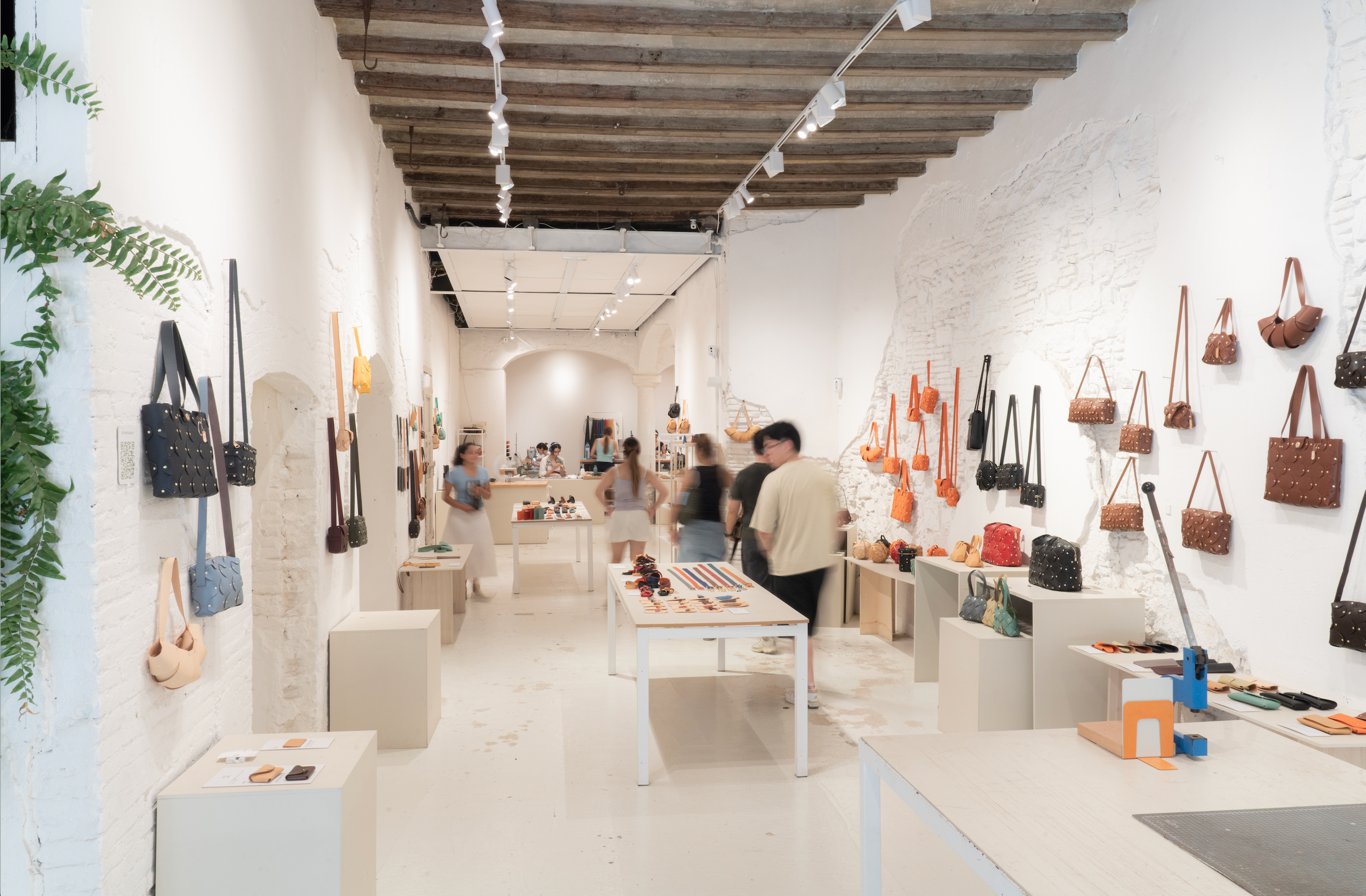
Atelier Madre is a Barcelona based studio, and leather is not something we work with occasionally or conceptually. It is something we handle every day, from selecting raw hides to cutting, assembling, and finishing the final object.
Because of this, our understanding of leather does not come from trends or short product cycles. It comes from seeing how different leathers behave after months, years, and thousands of hours of real use. We see which leathers soften without weakening, which ones age with character, and which ones fail despite looking perfect at the beginning.
This long term perspective is why we consistently return to vegetable tanned full grain leather. Not because it is fashionable, but because it proves itself over time. It can be repaired, it develops patina rather than damage, and it remains structurally sound even as it changes.
Understanding leather properly does not lead to buying more. It leads to choosing better, using longer, and owning fewer objects that earn their place through daily use.
If you want to see how this philosophy translates into finished pieces, you can explore our Full Grain Leather Collection.
Leather Library
A reference for textures, finishes, and specialised leathers
Leather is not a single material. It is a family of surfaces, treatments, and behaviours shaped by finishing, tanning, and intended use. The resources below expand on specific leather types and finishes mentioned throughout this guide, grouped to make exploration intuitive rather than overwhelming.
Finished and surface-treated leathers
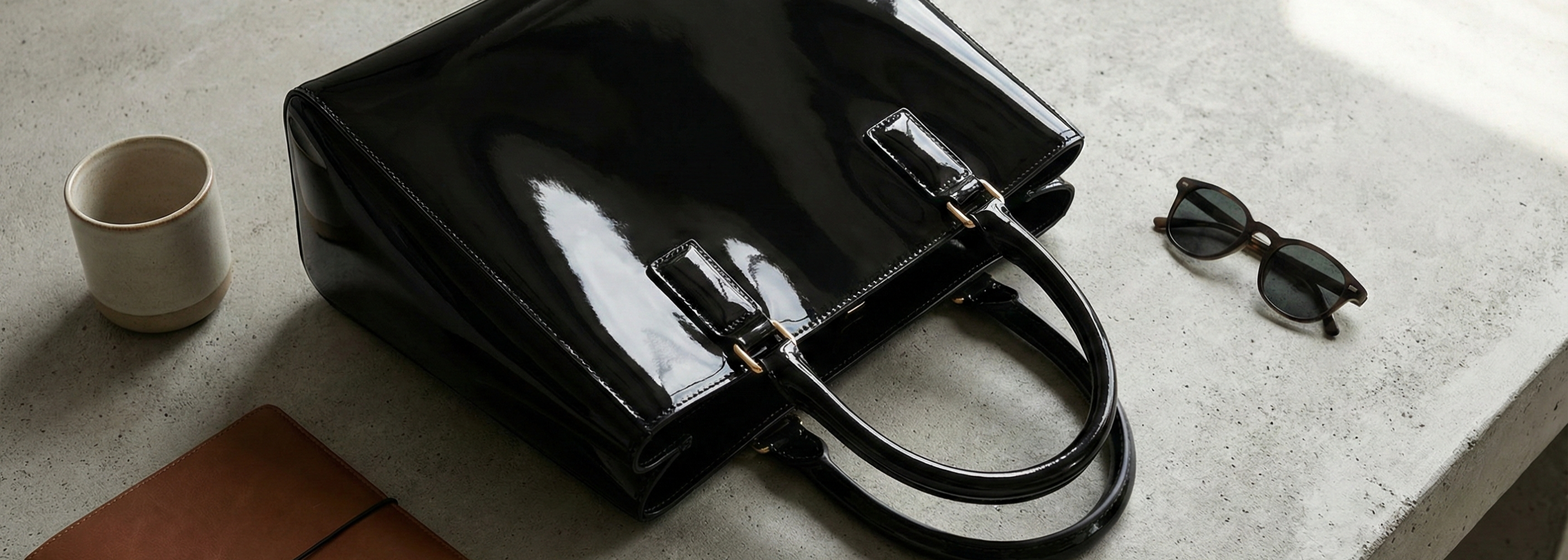
A high-gloss, coated leather defined by its reflective surface and resistance to moisture, often prioritising appearance over ageing.
A stamped, structured leather designed to hold its shape and resist scratches, commonly chosen when visual consistency matters.
A practical comparison explaining how texture affects grip, wear patterns, and long-term appearance.
Soft and supple leathers
A fine-grain calf leather known for its smooth hand feel and flexibility, often chosen when softness is the primary tactile priority.
A general term for exceptionally soft, lightly finished leathers, valued for comfort but dependent on construction for durability.
Natural and character-driven leathers
An untreated vegetable-tanned leather that darkens quickly and visibly, recording use and exposure more than almost any other type.
Leather infused with oils for increased water resistance and flexibility, often chosen for workwear and heavy-use applications.
Structured luxury leathers
A soft yet thick leather with visible grain, balancing structure and flexibility.
A grained leather designed to resist scratches while maintaining a relaxed structure over time.
Lower-quality and reconstructed leathers
A composite material made from leather scraps and binders, often mistaken for real leather despite very different performance and lifespan.
Exotic and alternative leathers
Exceptionally strong for its weight, with a dense fibre structure that offers high tear resistance.