
Artículo: Barcelona 3 Day Itinerary: What to Do, Where to Go, and What to Know
Barcelona 3 Day Itinerary: What to Do, Where to Go, and What to Know
Welcome to Barcelona. The city opens slowly, through light on stone streets, the sound of cafés coming to life, and a rhythm that becomes clear as you move through it. There is a lot to see, and even more to choose from, which can make the first days feel slightly unstructured.
This guide is here to make that easier. Over three days, you will move through the parts of Barcelona that matter, from architecture and food to the places and experiences that define the city. You will know where to go, what to expect, and how to spend your time without second guessing each step.
Everything is laid out in a way that follows how the city actually works, so you can focus on experiencing it rather than planning it.

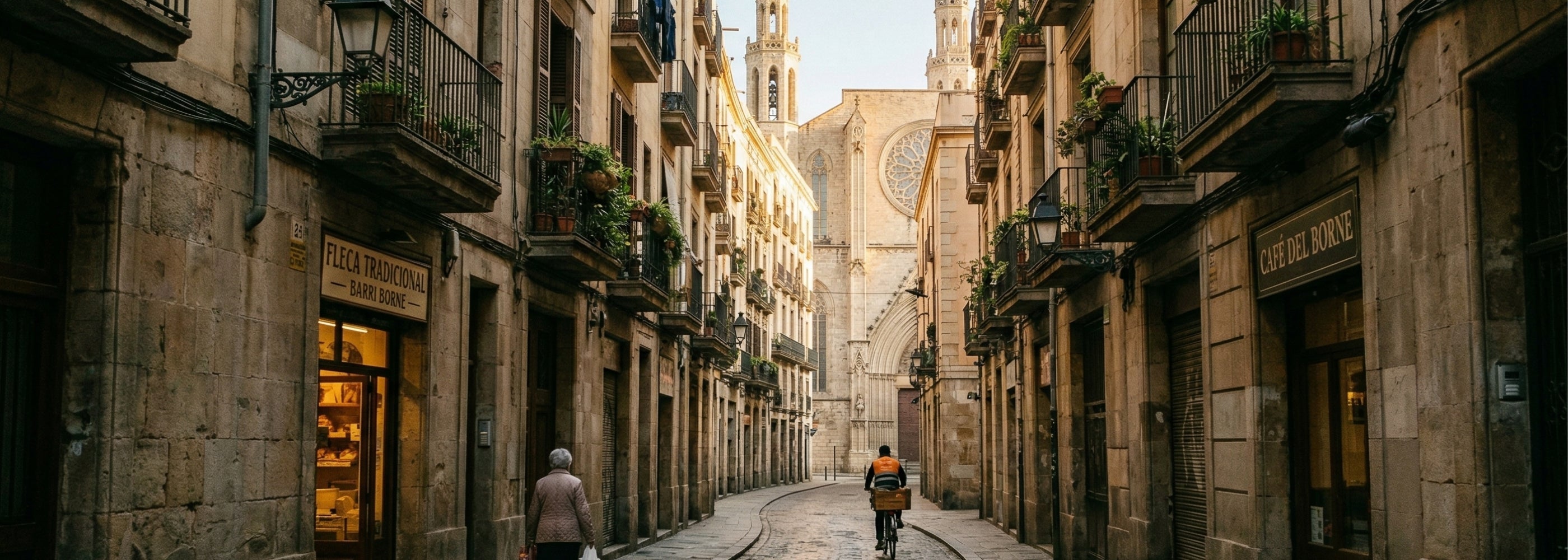
Picture created with the help of AI
What to Know When You Arrive in Barcelona
Barcelona is easy to settle into, but the first day can feel slightly overwhelming if you do not know how the city moves. Once you understand the rhythm, everything becomes straightforward and natural.
Transport is simple and reliable.
If you are in Barcelona for a few days, you do not need to overthink transport.
Most of the areas you will spend time in are close to each other. El Born, the Gothic Quarter, and parts of Eixample are all easily walkable, and walking is often the best way to experience the city.
For longer distances, taxis are the simplest option. They are easy to find, reasonably priced, and save time without needing to navigate routes or stations.
If you prefer using an app, Free Now works well in Barcelona and connects directly to licensed taxis. Uber is available, but less consistent than in other cities.
Public transport is efficient, but for a short stay it is usually not necessary unless you plan to move across the city frequently. A transport card can make sense if you are staying further out, but for most visitors, walking combined with occasional taxi rides is the easiest approach.
The city runs later than you expect.
Lunch usually starts around 1:30 to 2:00, and dinner around 8:30 or later. Restaurants begin to feel right closer to 9:00, and evenings naturally extend from there.
After dinner, the city does not slow down. People move between bars, terraces, and quieter spaces well past midnight. If you are planning a longer evening, places begin to fill from 11:00 onward, and the atmosphere builds gradually rather than all at once.
Spring weather is mild and comfortable.
From March to May, daytime temperatures usually range between 16°C and 22°C, with evenings around 12°C to 16°C. It is one of the most pleasant times to be in the city. Rain does occur, but it is usually light and short. You may have a passing shower rather than a full day of rain.
The light in spring is softer, and the city feels more open. It is a season where walking becomes part of the experience rather than something you plan around.
What Happens in Barcelona During Spring …
Barcelona has specific moments during spring that shape the atmosphere of the city.
Sant Jordi on April 23
Across the city, especially in central streets like Passeig de Gràcia and Rambla de Catalunya, book and rose stalls fill the streets from morning until evening. It is one of the most distinctive days in Barcelona, where people exchange books and roses, and the entire city feels active and engaged.
Semana Santa in March or April depending on the year
You will see religious processions in parts of the city, particularly in the Gothic Quarter. These usually take place in the evening, with a slower, more formal atmosphere.
Feria de Abril de Catalunya late April to early May
Held at Parc del Fòrum, this runs over several days with music, food, and evening gatherings. It is more lively and social, especially after sunset.
With that in mind, here is how to spend three days in Barcelona, moving through the city in a way that makes sense from the moment you arrive.

Picture created with the help of AI
Day One
Morning
From there, move naturally through the surrounding streets. Walk along Carrer de l'Argenteria and continue toward Passeig del Born, letting the area open up as you go. This part of the city is compact, and the experience comes from moving through it rather than following a strict route.
Make your way to Santa Maria del Mar. Built in the 14th century, it is one of the most balanced Gothic interiors in Barcelona, with clean lines and an open structure that is easy to take in.
From here, continue through El Born toward Atelier Madre. The walk is short, and it keeps you within the same rhythm of the neighborhood.

Picture created with the help of AI
Atelier Madre
The atelier is set up as a single open space where materials, construction, and finished pieces exist together. You can speak directly with the artisan and follow how each bag is developed, from the initial cut to the final form.
Each piece is built with clear proportions and a defined structure rather than surface decoration. The focus is on how the bag holds its shape and how it functions in daily use.

Picture created with the help of AI
The croissant bag is the piece that consistently stands out. The form comes from a shape that is part of everyday life in Barcelona, translated into leather through a pattern that follows a continuous curve. Because the structure is built around that curve, the bag holds together without distortion and sits close to the body when worn.
It is made in vegetable tanned full grain leather, which keeps the structure while developing patina over time. The surface changes gradually with use, becoming more defined rather than wearing out.
Afternoon
Lunch in Barcelona begins around 13:30 and is considered the main meal of the day. Restaurants are built around this timing, and arriving within that window gives you the full experience.
At Cal Pep, sitting at the bar places you directly in front of the kitchen. Orders are not strictly menu driven. The kitchen works with what is fresh, and dishes come out in sequence rather than in fixed courses.
What to order:
- grilled prawns, cooked simply with salt
- razor clams, served quickly to keep texture
- tortilla, soft in the center
- anything fresh that is suggested
The meal builds gradually, with plates arriving one after another rather than all at once.
If you prefer a table, Tapeo Born offers a more structured setting while keeping the same approach to ingredients.
What to order:
- jamón ibérico, sliced to order
- croquettes, crisp outside and soft inside
- octopus, typically served with paprika and olive oil
- seasonal vegetables, depending on availability
After lunch, walk to Antic Teatre. It is a courtyard hidden behind the street, used as a cultural space and bar. It provides a quieter environment where you can sit and extend the afternoon without needing to move immediately.
Evening
Wine culture in Barcelona is closely tied to small plates and informal settings before dinner.
At Bar Brutal, the focus is on natural wines, with bottles selected for character rather than consistency. The food is designed to match that style, with simple preparations that support the wine rather than dominate it.
Dinner follows later, usually from 20:30 onward.
At Estimar, the focus is on seafood handled with minimal intervention.
What to order:
- red shrimp, often served raw or lightly prepared
- grilled fish, depending on the daily catch
- simple starters that do not interfere with the main product
The preparation highlights the ingredient itself rather than technique.
Night
Cocktails in Barcelona are taken after dinner and often involve moving between places rather than staying in one.
At Paradiso, drinks are built with attention to presentation and layered flavors. The setting is controlled, and each drink is structured.
At Dr. Stravinsky, the approach is more ingredient driven, with a focus on balance and technique. The space is smaller and more focused.
Both places tend to fill later in the evening, and arriving after dinner fits the timing of the city.
If you continue, nearby bars remain open, and movement between places is common. The night develops through progression rather than staying in one location.

Picture created with the help of AI
Day Two
Morning
Start early at Sagrada Família. Book your ticket online in advance and choose the first available time slot. Entry lines build quickly, and early access gives you more space inside.
The interior is defined by light passing through stained glass. As the sun rises, colors move across the columns and floor, which is a key part of the experience. Stay long enough to see this shift rather than moving through quickly.
If you choose tower access, it adds a vertical perspective and helps you understand the scale of the structure in relation to the city.
After your visit, take a taxi to Gràcia.
Gràcia was once a separate village, and it still feels different from the central grid. Streets are narrower, and movement is slower. Walk through Plaça de la Vila de Gràcia and the surrounding streets without a fixed route.
Stop for coffee at:
- SlowMov, where the focus is on slower preparation and sustainability
- Onna Coffee Gràcia, known for clean, precise roasting
Both work as a reset after the intensity of Sagrada Família.
Afternoon
Head toward the coastline, but go directly to Platja de la Nova Icaria.
This section of the beach is more open, with better spacing between groups and a more balanced atmosphere. It allows you to stay longer without constant movement around you.
Walking along the shoreline or sitting for a while works equally well. The key here is time rather than activity.
Lunch by the sea is centered around rice and seafood, which are core to coastal Catalan cuisine.
At Can Fisher, the kitchen focuses on rice dishes prepared to order.
What to order:
- seafood rice, cooked with stock and served in a wide pan
- grilled fish, depending on the catch
- light starters such as anchovies or salads
Rice dishes are meant to be shared and take time to prepare, so ordering one central dish is typical.
If you prefer something more informal, the chiringuitos along Nova Icaria offer simpler meals with direct access to the beach. The experience is less structured but still aligned with the setting.
Late Afternoon
After the beach, move back toward the city through Parc de la Ciutadella.
The park provides a shift from open coastline to a more contained environment. Wide paths, greenery, and shaded areas allow you to slow down before the evening.
You can walk through or sit near the central fountain. This part of the day works as a transition rather than a destination.
Evening
Dinner on this day works best when it is focused and not too extended, as the night continues afterward.
At Direkte Boqueria, the experience is centered around a small counter and a controlled sequence of dishes.
What to expect:
- a tasting format rather than ordering individually
- seasonal ingredients prepared in a structured progression
- direct interaction with the chef
The scale is small, and booking is essential.
If you prefer something with more movement, Bar Brutal can work again, offering flexibility between wine and food without a fixed structure.
Night
Barcelona nightlife begins late, with most places filling after midnight.
Start at Sips. The focus is on modern cocktail construction, with a clean presentation and precise balance. Drinks are served without unnecessary elements, keeping attention on flavor.
Move to Two Schmucks, where the atmosphere is more social and less structured. The space is smaller, and interaction becomes part of the experience.
From here, choose based on the type of night you want.
For larger, high energy spaces:
- Opium, located along the beach, with a mix of music and a larger crowd
- Pacha Barcelona, combining club space with an outdoor terrace
For a more selective environment:
- Les Enfants Brillants, smaller, more controlled, and more focused on music
Arriving after midnight aligns with how these spaces operate. Earlier hours tend to be quieter, while later entries match the natural rhythm of the city.

Picture created with the help of AI
Day Three
Morning
Start your morning at Bunkers del Carmel, going early while the city is still quiet. From here, Barcelona opens completely in front of you. The grid of Eixample, the older parts of the city, and the coastline all become visible at once, making it easier to understand how everything connects.
There is nothing structured about the space, which is part of why it works. You stay as long as you need, walk along the edge, and take in the view without interruption.
If you prefer something more accessible, the steps in front of MNAC on Montjuïc offer a similar perspective, with a more formal setting and a direct view over Plaça d'Espanya and the city beyond.
Late Morning
From there, move toward Passeig de Gràcia, where the city shifts into a more structured and refined atmosphere.
Walking along this avenue, you pass Casa Batlló and Casa Milà. Casa Batlló changes with the light, with color and shape that feel fluid across the façade. Casa Milà is more solid and architectural, with a heavier stone structure and a rooftop designed as a series of sculptural forms.
You can enter one of them if you want to go deeper, or continue walking and observe from the outside.
Stop at Café de la Pedrera, inside Casa Milà. Sit down, order a coffee and something light, and take a moment before continuing. The setting is quiet, and the pace naturally slows.
Afternoon
Lunch on the final day is where you sit longer and choose more deliberately.
At El Nacional, different Spanish cuisines are brought together in one space, allowing you to focus on specific dishes without moving between locations.
Order:
- jamón ibérico, sliced fresh
- seafood from the fish counter
- grilled meats depending on preference
The structure of the space allows you to move slightly between sections while keeping the meal continuous.
If you prefer a market setting, go to La Boqueria, but choose carefully. Look for stalls with visible turnover and simple preparations.
You will find:
- fresh seafood prepared quickly
- jamón carved to order
- small plates served directly at the counter
The experience is faster, but still grounded in product and preparation.
Late Afternoon
In the afternoon, return to the areas that stayed with you.
Walking again through El Born or along Passeig de Gràcia feels different now. You move with more clarity, and decisions become easier because you already understand what you are looking for.
This is usually when people finalize what they want to take with them. You revisit places, step inside without hesitation, and choose with more confidence.
If you need a pause, stop at a café and sit without planning the next step. This part of the day is about closing the experience rather than adding more.
Evening
For your last dinner, choose a place where the meal is structured and complete.
At Cinc Sentits, the experience is built around a tasting menu that moves through a sequence of dishes based on seasonal ingredients. The pacing is controlled, and each course is designed to follow the previous one.
At Xerta, the atmosphere is slightly more relaxed, but the focus on regional cuisine and seafood remains clear.
In both cases, the meal is not rushed. It builds gradually and gives a clear end to the day.
Night
End the night at a rooftop.
At the Edition Hotel rooftop, you are in the center of the city, with a close view over the rooftops of Barcelona.
At Terraza Martínez, the view opens more widely toward the port and coastline.
Order a drink, sit, and stay for a while. The city moves below you, and the pace naturally slows.
Before you leave, it is worth taking something back with you. Not just for yourself, but for the people you have in mind while you are here.
A well-made leather piece works as a gift because it is used daily. A wallet, a cardholder, or a small bag becomes part of someone’s routine rather than something that stays unused.
If you are in El Born, step into Atelier Madre. We will guide you through the pieces and help you choose something that fits the person you are buying for, whether it is a smaller item or a bag that carries the same structure and material as the rest of the collection.
It is a simple way to bring a part of Barcelona back with you.