Veganes Leder ist zu einer gängigen Alternative zu traditionellem Leder in den Bereichen Mode, Accessoires und Inneneinrichtung geworden. Von Handtaschen und Geldbörsen bis hin zu Jacken, Schuhen und Polstermöbeln wird es oft als eine grausamkeitsfreie und nachhaltige Alternative beworben. Der Begriff "veganes Leder" wird jedoch häufig missverstanden.
Veganes Leder ist weder ein einzelnes Material, noch ist es automatisch umweltfreundlich. Es handelt sich um eine weit gefasste Kategorie, die Materialien mit sehr unterschiedlichen Zusammensetzungen, Lebensdauern und Umweltauswirkungen umfasst. Um veganes Leder richtig zu verstehen, ist es wichtig, über die Etiketten hinaus zu schauen und zu untersuchen, wie es hergestellt wird, wie es funktioniert und welche Kompromisse es mit sich bringt.
Inhaltsübersicht
- Was ist veganes Leder?
- Woraus ist veganes Leder hergestellt?
- Arten von veganem Leder
- Vorteile von veganem Leder
- Nachteile von veganem Leder
- Veganes Leder im Vergleich zu anderen Lederarten
- Veganes Leder vs. pflanzlich gegerbtes Vollnarbenleder
- Veganes Leder auf Pflanzenbasis
- Aktuelle Innovationen in der veganen Lederproduktion
- Künftige Materialien und Technologien
- Ist veganes Leder nachhaltig?
- Häufig gestellte Fragen (FAQ)
Was ist veganes Leder?
Veganes Leder ist ein Material, das das Aussehen und die Funktion von Tierleder imitieren soll, ohne dass tierische Häute oder aus Tieren gewonnene Bestandteile verwendet werden. Das entscheidende Merkmal von veganem Leder ist die Abwesenheit von tierischen Materialien, nicht die Art der Herstellung oder die Nachhaltigkeit.
Im Gegensatz zu herkömmlichem Leder, das durch Gerben aus Tierhaut hergestellt wird, ist veganes Leder ein technisches Material. Es wird durch die Kombination von Stoffen, Kunststoffen, Pflanzenfasern oder Harzen hergestellt, um eine lederähnliche Oberfläche und Textur zu erhalten.
Da sich der Begriff nur auf das bezieht, was es nicht enthält, nämlich tierische Produkte, kann veganes Leder in Bezug auf Qualität, Haltbarkeit und Umweltauswirkungen sehr unterschiedlich sein.
Woraus ist veganes Leder hergestellt?
Veganes Leder kann aus einer Vielzahl von Materialien hergestellt werden, die jedoch im Allgemeinen in zwei große Kategorien fallen:
- Synthetische Materialien (auf Kunststoffbasis)
- Materialien auf Pflanzenbasis
In vielen Fällen ist veganes Leder eine Mischung aus beidem.
Synthetische Komponenten
Die gängigsten veganen Leder auf dem Markt werden aus Kunststoffen wie Polyurethan (PU) oder Polyvinylchlorid (PVC) hergestellt. Diese Materialien werden als Beschichtung auf eine Textilunterlage, in der Regel Polyester oder Baumwolle, aufgetragen. Die Kunststoffschicht verleiht dem Material sein glattes, lederähnliches Aussehen, während das Gewebe für die strukturelle Unterstützung sorgt.
Diese Materialien werden aus fossilen Brennstoffen gewonnen und sind chemisch so beschaffen, dass sie flexibel, wasserfest und gleichmäßig sind.
Komponenten auf Pflanzenbasis
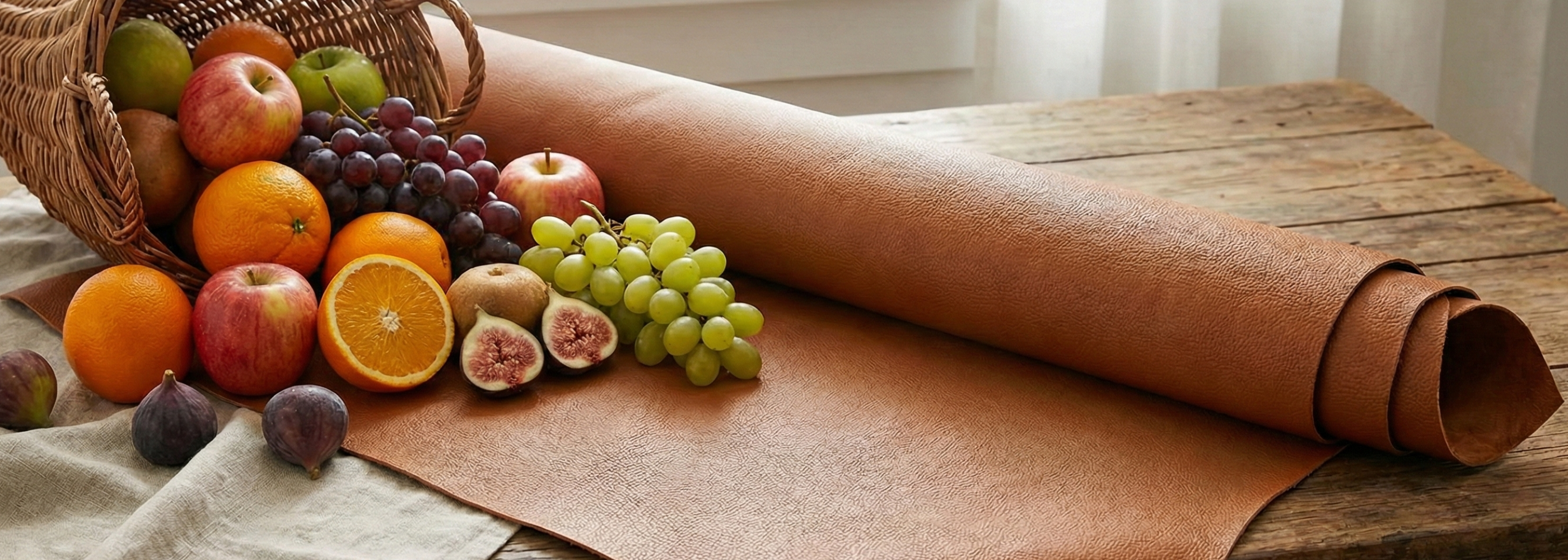
Einige vegane Leder enthalten Fasern, die aus Pflanzen oder landwirtschaftlichen Abfällen gewonnen werden, z. B. Ananasblätter, Kakteen, Apfelschalen, Pilze, Kork oder Bambus. Diese Fasern werden verarbeitet und mit Hilfe von Harzen zu lederähnlichen Blättern zusammengebunden.
Es ist wichtig zu wissen, dass die meisten veganen Leder auf pflanzlicher Basis immer noch einige synthetische Bindemittel enthalten, um die Haltbarkeit und Flexibilität zu verbessern.
Arten von veganem Leder
PU (Polyurethan) Leder
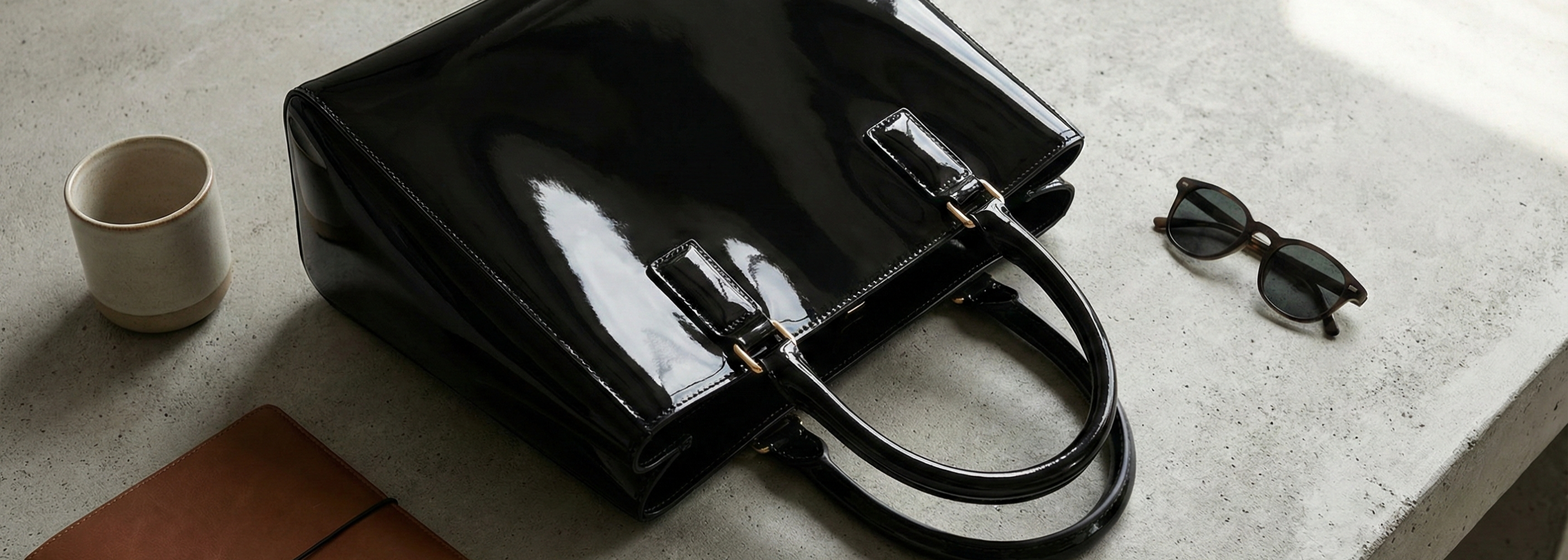
PU-Leder ist das am häufigsten verwendete vegane Leder. Es besteht aus einer Kunststoffbeschichtung, die auf einen Gewebeträger aufgebracht wird. Im Vergleich zu PVC ist PU flexibler und leichter, was es zu einem beliebten Material für Modeaccessoires und Kleidungsstücke macht.
PU-Leder ist jedoch nach wie vor auf Erdölbasis hergestellt, nicht biologisch abbaubar und neigt dazu, mit der Zeit zu reißen oder abzublättern.
PVC (Polyvinylchlorid) Leder
PVC-Leder besteht aus einer dickeren Kunststoffschicht und benötigt häufig Weichmacher, um flexibel zu bleiben. Es ist sehr wasserbeständig und kurzfristig haltbar, aber es ist auch die am wenigsten umweltfreundliche Option, da bei der Herstellung und Entsorgung giftige Chemikalien verwendet werden.
PVC-Leder ist weniger atmungsaktiv und kann mit der Zeit steif oder brüchig werden.
Veganes Leder auf Pflanzenbasis
Veganes Leder auf pflanzlicher Basis verwendet natürliche Fasern als primäres Rohmaterial. Beispiele sind Ananasleder (Piñatex), Kaktusleder, Apfelleder, Pilzleder und Korkleder.
Diese Materialien werden oft als nachhaltige Alternativen vermarktet, aber ihre Umweltauswirkungen hängen davon ab, wie viel Kunststoffharz als Bindemittel verwendet wird und wie lange das Material in der Praxis hält.
Leder auf Biobasis und Hybridleder
Einige neuere Materialien kombinieren Pflanzenfasern mit biobasierten oder teilweise synthetischen Harzen. Diese Hybridmaterialien zielen darauf ab, den Kunststoffanteil zu verringern und gleichzeitig die Haltbarkeit zu erhalten. Obwohl sie vielversprechend sind, befinden sich viele von ihnen noch in einem frühen Entwicklungsstadium und sind nur begrenzt verfügbar.
Vorteile von veganem Leder
Veganes Leder bietet, je nach Art, mehrere Vorteile.
Einer der Hauptvorteile besteht darin, dass keine Tierhäute verwendet werden, was es für diejenigen geeignet macht, die Wert auf grausamkeitsfreie Produkte legen. Veganes Leder hat außerdem in der Regel ein einheitliches Erscheinungsbild ohne Narben oder natürliche Unregelmäßigkeiten, was für Marken interessant ist, die auf visuelle Konsistenz Wert legen.
Veganes Leder auf Kunststoffbasis ist in der Regel erschwinglicher als hochwertiges Tierleder und bietet eine gute Wasserbeständigkeit. Optionen auf pflanzlicher Basis können den Wasserverbrauch und die Auswirkungen auf die Landwirtschaft im Vergleich zu Tierleder verringern, insbesondere wenn sie aus Abfallmaterialien hergestellt werden.
Nachteile von veganem Leder
Trotz seiner Vorteile hat veganes Leder deutliche Einschränkungen.
Veganes Kunstleder wird aus Kunststoffen hergestellt, die aus fossilen Brennstoffen gewonnen werden, und ist nicht biologisch abbaubar. Mit der Zeit kann es Mikroplastik absondern und landet oft auf Mülldeponien. Seine Lebensdauer ist in der Regel kürzer als die von gut verarbeitetem Naturleder, insbesondere bei Produkten, die täglich getragen werden.
Veganes Leder auf pflanzlicher Basis ist zwar ökologisch vielversprechender, basiert aber häufig noch auf synthetischen Bindemitteln und verfügt nur über begrenzte Daten zur langfristigen Leistung. Die Reparierbarkeit ist bei allen veganen Ledertypen gering, d. h. beschädigte Artikel werden in der Regel eher entsorgt als repariert.
Veganes Leder im Vergleich zu anderen Lederarten
Die Unterschiede zwischen veganem Leder und herkömmlichem Leder werden deutlicher, wenn man die wichtigsten Eigenschaften vergleicht.
| Merkmal | Veganes Leder | Vollnarbenleder | Echtes/gebundenes Leder |
|---|---|---|---|
| Rohmaterial | Kunststoff- oder Pflanzenfasern | Tierhaut | Lederreste + Bindemittel |
| Biologische Abbaubarkeit | Gering bis gar nicht | Mäßig (je nach Bräunung) | Sehr niedrig |
| Dauerhaftigkeit | Kurz bis mittel | Langfristig (Jahrzehnte) | Kurz |
| Reparierbarkeit | Sehr begrenzt | Hoch | Sehr begrenzt |
| Alterung | Risse oder Schalen | Entwickelt Patina | Degradiert |
| Atmungsaktivität | Niedrig | Hoch | Niedrig |
| Nachhaltigkeit | Abhängig von der Art | Abhängig von der Beschaffung | Niedrig |
Während bei veganem Leder die Verwendung von Tieren vermieden wird, zeichnet sich Vollnarbenleder durch Langlebigkeit und Reparierbarkeit aus - wichtige Faktoren für die allgemeine Nachhaltigkeit.
Veganes Leder vs. pflanzlich gegerbtes Vollnarbenleder
Veganes Leder und traditionelles Leder werden oft als Alternativen diskutiert, aber ihr Verhalten im Laufe der Zeit ist grundlegend anders, insbesondere im Vergleich zu pflanzlich gegerbtem Vollnarbenleder.
Die meisten veganen Leder, ob auf Kunststoff- oder Pflanzenbasis, basieren auf Oberflächenbeschichtungen oder verklebten Schichten, um ein lederähnliches Aussehen zu erzeugen. Wenn diese Oberflächen verschleißen, wird das Material allmählich abgebaut und kann nicht wiederhergestellt werden. Risse und Abblätterungen sind eher Zeichen des Abbaus als der natürlichen Alterung, was die nutzbare Lebensdauer des Produkts begrenzt.
Pflanzlich gegerbtes Vollnarbenleder ist strukturell anders aufgebaut. Es wird aus dem stärksten Teil der Haut hergestellt und mit natürlichen Pflanzenextrakten anstelle von synthetischen Chemikalien gegerbt. Dadurch bleibt die natürliche Faserstruktur des Leders erhalten und es kann sich mit der Zeit biegen, erholen und eine Patina entwickeln. Die Farbe vertieft sich, Flecken werden weicher, und das Material gewinnt durch den Gebrauch an Charakter, anstatt seine Integrität zu verlieren.
Langlebigkeit spielt eine wichtige Rolle bei der Nachhaltigkeit. Materialien, die für eine jahrzehntelange Nutzung ausgelegt sind und repariert werden können, verursachen oft weniger langfristigen Abfall als Materialien, die für eine kurzfristige Nutzung vorgesehen sind, unabhängig davon, wie sie kategorisiert werden.
Aus diesem Grund arbeiten wir ausschließlich mit pflanzlich gegerbtem Vollnarbenleder, das aufgrund seiner Langlebigkeit, Reparierbarkeit und der Tatsache, dass es mit der Zeit immer besser wird, ausgewählt wird. Wenn Sie sich ein Bild von den Stücken machen möchten, die mit diesem Ansatz hergestellt wurden, können Sie sich unsere Vollnarbenleder-Kollektion.
Veganes Leder auf Pflanzenbasis
Veganes Leder auf Pflanzenbasis wird oft als die Zukunft der Lederalternativen angesehen. Materialien wie Kaktus- und Ananasleder nutzen erneuerbare Ressourcen und landwirtschaftliche Abfälle und verringern die Abhängigkeit von fossilen Brennstoffen.
Kaktusleder beispielsweise benötigt nur wenig Wasser und die Pflanze muss bei der Ernte nicht zerstört werden. Bei Leder auf Pilzbasis werden Myzelstrukturen verwendet, die in kontrollierter Umgebung gezüchtet werden und innovative Möglichkeiten bieten.
Die meisten Leder auf pflanzlicher Basis sind jedoch nach wie vor Verbundstoffe. Da sie synthetische Bindemittel enthalten, sind sie nicht vollständig biologisch abbaubar, und ihre Haltbarkeit variiert je nach Formulierung und Verwendungszweck stark.
Aktuelle Innovationen in der veganen Lederproduktion
Biobasierte Polymere: Ein bedeutender Fortschritt bei der Herstellung von veganem Leder ist die Entwicklung von Polymeren auf Biobasis. Diese Polymere, die aus organischen und erneuerbaren Quellen wie Mais, Soja und sogar Abfallprodukten aus anderen Industrien gewonnen werden, dienen der Herstellung nachhaltigerer Formen von Kunstleder. Diese Materialien verringern nicht nur die Abhängigkeit von fossilen Brennstoffen, sondern bieten auch eine bessere biologische Abbaubarkeit und einen geringeren ökologischen Fußabdruck.
3D-Drucktechnologie: Die Anwendung des 3D-Drucks bei der Herstellung von veganem Leder ist ein aufstrebender Bereich, der eine präzise Kontrolle über die Textur und Dicke des Materials ermöglicht. Mit dieser Technologie können komplexe, geschichtete Strukturen geschaffen werden, die die natürlichen Eigenschaften von traditionellem Leder besser nachahmen und damit sowohl die ästhetischen Qualitäten als auch die physische Haltbarkeit von veganen Lederprodukten verbessern können.
Vernetzungs-Techniken: Die strukturelle Integrität von veganem Leder kann durch fortschrittliche chemische Vernetzungsmethoden verbessert werden. Bei diesen Verfahren werden die Polymerstrukturen innerhalb des veganen Leders verstärkt, um seine Widerstandsfähigkeit gegen Abnutzung und Verschleiß zu verbessern, so dass es sich besser für stark beanspruchte Anwendungen wie Schuhe und Möbel eignet.
Nanotechnologie: Durch die Einarbeitung von Partikeln in Nanogröße in vegane Ledermaterialien können deren Eigenschaften erheblich verbessert werden. So können Nanopartikel beispielsweise einen UV-Schutz, antimikrobielle Eigenschaften und eine erhöhte Zugfestigkeit bieten, die alle zu einer längeren Lebensdauer und einem größeren Nutzen der veganen Lederprodukte beitragen.
Künftige Materialien und Technologien
Im Labor gezüchtetes Leder: Ein vielversprechender Forschungsbereich ist die Kultivierung lederähnlicher Materialien aus Hefezellen, die Kollagen produzieren, das dann zu einem Bioleder mit ähnlichen Eigenschaften wie Leder tierischen Ursprungs verarbeitet werden kann. Dieser Ansatz ist nicht nur frei von Grausamkeiten, sondern bietet möglicherweise auch eine bessere Konsistenz und individuelle Anpassung in Bezug auf Dicke, Farbe und Textur.
Recycling- und Upcycling-Prozesse: In dem Maße, wie die Kreislaufwirtschaft an Zugkraft gewinnt, werden Techniken für das Recycling und Upcycling bestehender veganer Lederprodukte entwickelt. Diese Verfahren zielen darauf ab, Abfall und Umweltauswirkungen zu verringern, indem veganes Leder nach dem Verbrauch in neue Materialien umgewandelt wird, die dann wieder in den Produktionskreislauf zurückgeführt werden können.
Elegantes veganes Leder: Im Hinblick auf die Integration intelligenter Technologien könnten künftige vegane Leder eingebettete Sensoren oder leitfähige Materialien enthalten, die über die Ästhetik hinausgehende Funktionen bieten. Dazu könnten Temperaturregulierung, Farbwechsel oder sogar Funktionen zur Gesundheitsüberwachung gehören, wodurch die Verwendung von veganem Leder auf technologieorientierte Märkte ausgeweitet würde.
Diese Innovationen und zukünftigen Materialien verdeutlichen den dynamischen Charakter der Forschung und Entwicklung von veganem Leder. Mit fortlaufenden Fortschritten wird veganes Leder nicht nur zu einem haltbareren Material, sondern auch zu einem Material, das Funktionalitäten bieten könnte, die über die von herkömmlichem Leder hinausgehen. Die Entwicklung von veganem Leder wird weiterhin durch die Nachfrage der Verbraucher nach nachhaltigen, ethischen und leistungsstarken Materialien vorangetrieben und verspricht eine faszinierende Zukunft für diese Alternative zu Leder tierischer Herkunft.
Reinigung und Pflege von veganem Leder
Die Pflege von veganem Leder unterscheidet sich von der Pflege von Naturleder. Da veganes Leder keine natürlichen Fasern hat, nimmt es Öle und Pflegemittel nicht in gleicher Weise auf.
Zur Reinigung von veganem Leder:
- Verwenden Sie ein weiches, feuchtes Tuch, um die Oberfläche regelmäßig abzuwischen.
- Bei Schmutz oder Flecken milde Seife in Wasser verdünnt verwenden
- Vorsichtig abwischen und sofort mit einem sauberen Tuch trocknen
- Vermeiden Sie es, das Material einzuweichen oder scharfe Chemikalien zu verwenden.
Veganes Leder sollte nicht mit herkömmlichen Ledercremes oder -ölen gepflegt werden, da diese die Oberflächenbeschichtung beschädigen können.
Zur Verlängerung der Lebensdauer:
- Halten Sie es von längerer Hitze oder direkter Sonneneinstrahlung fern.
- Vermeiden Sie übermäßiges Biegen oder Falten
- An einem kühlen, trockenen Ort aufbewahren
Im Gegensatz zu natürlichem Leder kann veganes Leder nicht wiederhergestellt werden, wenn die Oberfläche Risse bekommt oder sich ablöst.
Ist veganes Leder nachhaltig?
Veganes Leder ist nicht von Natur aus nachhaltig.
In Wirklichkeit sind die meisten veganen Lederprodukte auf dem Markt auf Kunststoffbasis. Sie vermeiden zwar die Verwendung von Tieren, bringen aber Umweltprobleme im Zusammenhang mit der Gewinnung fossiler Brennstoffe, der chemischen Verarbeitung und dem Abfall mit sich.
Veganes Leder auf pflanzlicher Basis kann unter den richtigen Bedingungen nachhaltiger sein, aber die Nachhaltigkeit hängt stark davon ab:
- Materialzusammensetzung
- Anteil an synthetischen Bindemitteln
- in der Produktion eingesetzte Energie
- Lebensdauer des Produkts
Ein kurzlebiges Material mit der Aufschrift "Öko" kann mehr Abfall erzeugen als ein langlebiges Produkt, das für Jahrzehnte ausgelegt ist.
Häufig gestellte Fragen (FAQ)
Ist veganes Leder besser für die Umwelt als echtes Leder?
Nicht immer. Während bei veganem Leder auf die Verwendung von Tieren verzichtet wird, werden viele vegane Lederprodukte aus erdölbasierten Kunststoffen wie PU oder PVC hergestellt. Diese Materialien sind nicht biologisch abbaubar und können im Laufe der Zeit Mikroplastik absondern. Wenn man die Haltbarkeit und die Auswirkungen am Ende der Lebensdauer berücksichtigt, kann veganes Leder auf Kunststoffbasis einen größeren ökologischen Fußabdruck haben als verantwortungsvoll beschafftes, langlebiges Naturleder.
Hält veganes Leder genauso lange wie echtes Leder?
Im Allgemeinen nicht. Die meisten veganen Ledersorten haben eine kürzere Lebensdauer als hochwertiges Naturleder. Da veganes Leder auf Oberflächenbeschichtungen oder verklebten Schichten beruht, neigt es dazu, mit der Zeit zu reißen oder abzublättern, und kann nicht mehr repariert werden, wenn die Oberfläche bricht. Natur Vollnarbenleder hingegen kann bei richtiger Pflege Jahrzehnte halten.
Ist veganes Leder biologisch abbaubar?
Das meiste vegane Leder ist nicht biologisch abbaubar. PU- und PVC-basierte Materialien sind Kunststoffe und verbleiben sehr lange in der Umwelt. Einige vegane Leder auf Pflanzenbasis können teilweise biologisch abbaubar sein, aber das hängt davon ab, wie viel synthetisches Bindemittel bei der Herstellung verwendet wird. Vollständig biologisch abbaubares veganes Leder ist immer noch selten.
Kann veganes Leder reißen oder abblättern?
Ja. Risse und Abplatzungen sind übliche Verschleißerscheinungen bei veganem Leder, insbesondere bei Lederarten auf Kunststoffbasis. Da sich die Oberflächenbeschichtung zersetzt, ist der Schaden dauerhaft und kann nicht wiederhergestellt werden. Dies unterscheidet sich von natürlichem Leder, das eher eine Patina entwickelt als ein Oberflächenversagen.
Warum ist veganes Leder immer noch beliebt?
Veganes Leder ist nach wie vor beliebt, weil es mit den Werten der Grausamkeitsfreiheit übereinstimmt, kostengünstigere Alternativen zu Leder bietet und ein einheitliches Erscheinungsbild für Marken bietet. Außerdem ist es weithin verfügbar und leicht zu verarbeiten, was es für die Massenproduktion und schnelle Mode attraktiv macht.
Ist veganes Leder dasselbe wie Kunstleder?
In den meisten Fällen, ja. Kunstleder ist ein älterer Begriff, der sich in der Regel auf Lederalternativen auf Kunststoffbasis bezieht. Heute ist der Begriff veganes Leder gebräuchlicher, aber viele Produkte, die als veganes Leder verkauft werden, werden immer noch aus denselben PU- oder PVC-Materialien hergestellt.
Ist veganes Leder auf Pflanzenbasis besser als veganes Leder aus Kunststoff?
Veganes Leder auf pflanzlicher Basis kann eine bessere Option sein, wenn es weniger Plastik enthält und landwirtschaftliche Abfälle als Rohstoff verwendet. Die meisten pflanzlichen Varianten enthalten jedoch immer noch synthetische Bindemittel, und ihre Haltbarkeit ist unterschiedlich. Pflanzenbasiert bedeutet nicht automatisch völlig natürlich oder nachhaltig.
Kann veganes Leder repariert werden?
Veganes Leder ist schwer zu reparieren. Sobald die Oberflächenbeschichtung Risse aufweist oder abblättert, kann das Material nicht mehr auf die gleiche Weise repariert werden wie natürliches Leder. Das bedeutet, dass Produkte aus veganem Leder oft eher ersetzt als repariert werden.
Kann veganes Leder wie echtes Leder altern?
Nein. Veganes Leder entwickelt keine Patina. Veränderungen des Aussehens sind in der Regel Anzeichen von Abnutzung und nicht von natürlicher Alterung. Echtes Leder, insbesondere pflanzlich gegerbtes Vollnarbenleder, verändert seinen Charakter im Laufe der Zeit, da es auf Gebrauch, Licht und Handhabung reagiert.
Ist veganes Leder wasserdicht?
Die meisten veganen Ledersorten sind wasserbeständig, insbesondere solche auf Kunststoffbasis, da sie eine nicht poröse Oberfläche haben. Wasserbeständigkeit ist jedoch nicht gleichbedeutend mit Haltbarkeit. Längerer Kontakt mit Hitze, Reibung oder Feuchtigkeit kann die Lebensdauer des Materials dennoch verkürzen.
Um veganes Leder zu verstehen, muss man über die Etiketten hinausgehen und sich auf die Materialien, die Haltbarkeit und die tatsächlichen Umweltauswirkungen konzentrieren. Ethik, Nachhaltigkeit und Langlebigkeit sind nicht immer deckungsgleich, und eine fundierte Entscheidung hängt eher von Transparenz als von Marketingaussagen ab.
Letztendlich ist das beste Material eines, das ein Gleichgewicht zwischen Werten, Verantwortung, Leistung und Lebensdauer herstellt.